Month Selector - Click to see posts from a particular month only

Wednesday, June 3, 2020

Offtopic from Technology related post 004 : Indian Situation Report [Coronavirus Disease (COVID-19)] [part 4]

Indian Situation Report [Coronavirus Disease (COVID-19)]

Stock markets:

Impact of COVID-19 on National Stock Exchange of India NIFTY 50 (1 Jan 2020 to 19 May 2020). "The NIFTY 50 is NSE's benchmark broad based stock market index for the Indian equity market."

On 23 March 2020, stock markets in India post worst losses in history.[12] SENSEX fell 4000 points (13.15%) and NSE NIFTY fell 1150 points (12.98%).However, on 25 March, one day after a complete 21-day lock-down was announced by the Prime Minister, SENSEX posted its biggest gains in 11 years, adding a value of ₹4.7 lakh crore (US$66 billion) crore for investors. On 8 April, following positive indication from the Wall Street that the pandemic may have reached its peak in the US, the stock markets in India rose steeply once again. By 29 April, Nifty held the 9500 mark.

E-commerce:

In the third week of March, Amazon announced that it would stop sale of non-essential items in India so that it can focus on essential needs. Amazon has followed the same strategy in Italy and France.On 25 March, Walmart-owned Flipkart temporarily suspended some of its services on its e-commerce platform and will only be selling and distributing essentials. BigBasket and Grofers also run restricted services, facing disruptions in services due to the lockdown. Delhi Police began issuing delivery agents curfew passes to make it easier for them to keep the supply chain open. E-commerce companies also look for legal clarity related to what are "essentials".


There are concerns as to where will the government find the funds to fight coronavirus and keep the economy alive. Experts say the task force will have to look in to NPA norms, tax payments and income support to those in the unorganised sectors. A direct cash transfer scheme for the most vulnerable is also being considered, as has happened in other countries. The Press Information Bureau brought out a fact check that stories about a financial emergency being imposed in India are fake. A financial emergency has never been imposed in the history of India as yet.

Offtopic from Technology related post 003 : Indian Situation Report [Coronavirus Disease (COVID-19)] [part 3]

Indian Situation Report [Coronavirus Disease (COVID-19)]

GDP :

On 27 March, Moody's Investors Service downgraded its estimate of India's GDP growth for 2020 from 5.3% to 2.5%. Fitch Ratings revised its estimate for India's growth to 2%. India Ratings & Research also downgraded the FY21 estimate to 3.6%.In April 2020, the World Bank and rating agencies downgraded India's growth for fiscal year 2021 with the lowest figures India has seen in three decades since India's economic liberalization in the 1990s.On 12 April 2020, a World Bank report focusing on South Asia said that India's economy is expected to grow 1.5% to 2.8% for FY21. The World Bank report said that the pandemic has "magnified pre-existing risks to India's economic outlook". In mid-April the International Monetary Fund projection for India for the FY21 of 1.9% GDP growth was still the highest among G-20 nations. Confederation of Indian Industry (CII) estimated that India's GDP for FY21 will be between 0.9% and 1.5%.

Energy:

Night lights and economic activity are connected. In Delhi, night light radiance fell 37.2% compared to 1–31 March 2019. This was the biggest fall for any metro in India. Bangalore fell 32% while Mumbai dropped by 29%.India's fuel demand in April 2020 as compared to the previous year fell nearly 46%. Consumption of fuel was the lowest since 2007. Cooking gas (LPG) sales rose ~12%. An International Energy Agency report in April estimated India's annual fuel consumption will decline 5.6% in 2020. Diesel demand will drop ~6%.

Agriculture:

A study during the first two weeks of May by the Public Health Foundation of India, Harvard T H Chan School of Public Health and the Centre for Sustainable Agriculture found that "10% of farmers could not harvest their crop in the past month and 60% of those who did harvest reported a yield loss" and that a majority of farmers are facing difficulty for the next season. Due to logistical problems following the lockdown tea estates were unable to harvest the first flush. The impact of this on the second flush is not known. The entire Darjeeling tea based tea industry will see significant fall in revenue.Tea exports could drop up to 8% as a result. During the lockdown, food wastage increased due to affected supply chains, affecting small farmers.
Tuesday, June 2, 2020

Offtopic from Technology related post 002 : Indian Situation Report [Coronavirus Disease (COVID-19)] [part 2]

Indian Situation Report [Coronavirus Disease (COVID-19)]

24 MAY 2020: WHO SITUATION UPDATE STATED INDIA (24.05)131,868 CONFIRMED CASES3,867 TOTAL DEATHSSOUTH EAST ASIA REGION(23.05)182, 278 CONFIRMED CASES5, 556 TOTAL DEATHSWORLD(23.05)5,103,006 CONFIRMED CASES333,401 DEATHS.

The economic impact of the 2020 coronavirus pandemic in India has been largely disruptive. The World Bank and rating agencies had initially downgraded India's growth for fiscal year 2021 with the lowest figures India has seen in three decades since India's economic liberalization in the 1990s. How ever after the announcement of the economic package in mid-May, India's GDP estimates were downgraded even more to negative figures, signalling a deep recession. On 26 May, CRISIL announced that this will perhaps be India's worst recession since independence. State Bank of India research estimates a contraction of over 40% in the GDP in Q1 FY21.

Within a month, unemployment rose from 6.7% on 15 March to 26% on 19 April. During the lockdown, an estimated 14 crore (140 million) people lost employment. More than 45% of households across the nation have reported an income drop as compared to the previous year. The Indian economy was expected to lose over ₹32,000 crore (US$4.5 billion) every day during the first 21-days of complete lockdown, which was declared following the coronavirus outbreak. Under complete lockdown, less than a quarter of India's $2.8 trillion economic movement was functional. Up to 53% of businesses in the country were projected to be significantly affected .Supply chains have been put under stress with the lockdown restrictions in place; initially, there was a lack of clarity in streamlining what an "essential" is and what is not. Those in the informal sectors and daily wage groups are the most at risk. A large number of farmers around the country who grow perishables are also facing uncertainty. Various businesses such as hotels and airlines, are cutting salaries and laying off employees

Monday, June 1, 2020

Offtopic from Technology related post : Current COVID-19 Situation

Current COVID-19 Situation : The coronavirus COVID-19 pandemic is the defining global health crisis of our time and the greatest challenge we have faced since World War Two. Since its emergence in Asia late last year, the virus has spread to every continent except Antarctica. Cases are rising daily in Africa the Americas, Europe AND ASIA.

Countries are racing to slow the spread of the virus by testing and treating patients, carrying out contact tracing, limiting travel, quarantining citizens, and cancelling large gatherings such as sporting events, concerts, and schools. The pandemic is moving like a wave—one that may yet crash on those least able to cope. But COVID-19 is much more than a health crisis. By stressing every one of the countries it touches, it has the potential to create devastating social, economic and political crises that will leave deep scars. As the UN’s lead agency on socio-economic impact and recovery, UNDP will provide the technical lead in the UN’s socio-economic recovery, supporting the role of the Resident Coordinators, with UN teams working as one across all aspects of the response. We are in uncharted territory. Many of our communities are now unrecognizable. Dozens of the world’s greatest cities are deserted as people stay indoors, either by choice or by government order. Across the world, shops, theatres, restaurants and bars are closing.

Every day, people are losing jobs and income, with no way of knowing when normality will return. Small island nations, heavily dependent on tourism, have empty hotels and deserted beaches. The International Labour Organization estimates that 195 million jobs could be lost.

The COVID-19 pandemic in India is part of the worldwide pandemic of coronavirus disease 2019 (COVID-19) caused by severe acute respiratory syndrome coronavirus 2 (SARS-CoV-2). The first case of COVID-19 in India, which originated from China, was reported on 30 January 2020. As of 30 May 2020, the Ministry of Health and Family Welfare have confirmed a total of 173,763 cases, 82,370 recoveries (including 1 migration) and 4,971 deaths in the country. India currently has the largest number of confirmed cases in Asia with number of cases breaching the 100,000 mark on 19 May 2020. India's case fatality rate is relatively lower at 3.09%, against the global 6.63% as of 20 May 2020. Six cities account for around half of all reported cases in the country – Mumbai, Delhi, Ahmedabad, Chennai, Pune and Kolkata. As of 24 May 2020, Lakshadweep is the only region which have not reported a case.

On 22 March 2020, India observed a 14-hour voluntary public curfew at the instance of the prime minister Narendra Modi. The government followed it up with lockdowns in 75 districts where COVID-19 cases had occurred as well as all major cities. Further, on 24 March, the Prime Minister ordered a nationwide lockdown for 21 days, affecting the entire 1.3 billion population of India. On 14 April, the prime minister extended the ongoing nationwide lockdown till 3 May. On 1 May, lockdown across the country was further extended by two more weeks till 17 May. On 17 May, NDMA further extended the nationwide lockdown till 31 May. Dr V Ravi, Head of Neuro virology, National Institute of Mental Health and Neurosciences, said that up to 50 percent people in India would be infected by COVID-19 by the year-end if further relaxations are introduced to lockdown rules after May 31.

Sunday, May 17, 2020

Random Photographs 005 by Subhankar [Opening a phone and taking external power supply to know how every small component works]

 Photo by : Subhankar Karmakar

Theme : Technology - Opening a phone and taking external power supply to know how every small component works


Saturday, May 16, 2020

Random Photographs 004 by Subhankar [Taking Closeup pictures of pixels of the display using a manual focus web cam]

  Photo by : Subhankar Karmakar

Theme : Technology - Taking Closeup pictures of pixels of the display using a manual focus web cam


Thursday, May 14, 2020

Random Photographs 003 by Subhankar [Opening a phone and taking external power supply to know how every small component works]

  Photo by : Subhankar Karmakar

Theme : Technology - Opening a phone and taking external power supply to know how every small component works


Tuesday, May 12, 2020

Random Photographs 002 by Subhankar [Opening a phone and taking external power supply to know how every small component works]

  Photo by : Subhankar Karmakar

Theme : Technology - Opening a phone and taking external power supply to know how every small component works


Random Photographs by Subhankar [Opening a phone and taking external power supply to know how every small component works]

 Photo by : Subhankar Karmakar

Theme : Technology - Opening a phone and taking external power supply to know how every small component works


Tuesday, May 5, 2020

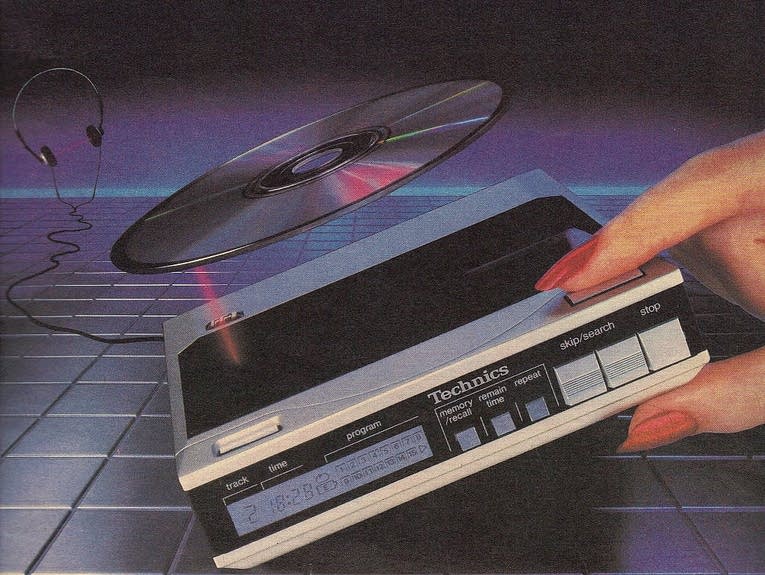
Compact Disks

In 1982 the fruits of a partnership between Sony and Philips were released to the music-loving public the compact disk or CD was unveiled as the first consumer digital audio format.

These 12 centimeter discs could store up to 74 minutes of perfect quality digital audio and as was famously demonstrated many times over, which're immune from liquid damage could withstand significant scratching and could be played without wearing them down for a theoretically infinite number of times.
                                                      
That's because unlike all previous sound, That's where the sound is encoded as an analog impression of the sound wave on plastic discs or Magnetic Tape the sound on a CD is encoded as a series of samples which function as a set of instructions on how to recreate the sound.
The compact disc was a big freaking deal in many ways. It represented a giant leap inconvenience for the consumer quality of the recorded sound and in raw data storage capacity that last bit wouldn't be too relevant to the Computing industry for some time, but it's solved the Central problem of digital sound needing  time for absurdly massive amount of raw Data,
                                                                                                                before we get too far into the specifics of the compact disc. It's time to dig a little deeper into how digital sound actually works for call . That an analog to digital converter is taken instantaneous samples of the analog signal at a specific sampling frequency. Then a digital to analog converter can recreate the original analog signal with only those samples. Well, a lot of people thought that this can't possibly work.

From copper to PCB [Last Part] – Photos I have used and Free softwares you can try !

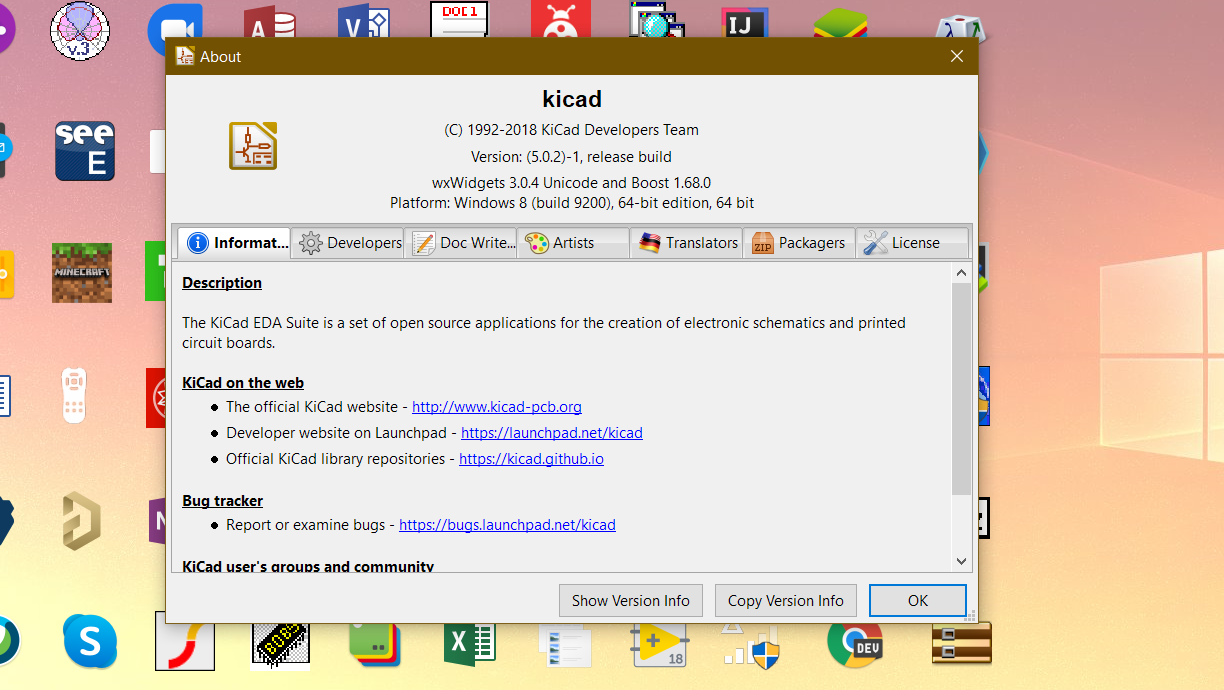
I have used photos from my mobile and some old junk hard disk controller PCBs and other junk PCBs, anyways I have designed one but have not got it manufactured, and for softwares I have used KiCAD – it is free software and you can get it and run it easily and also I have used images from Altium designer software( it is not free ) & Autodesk EAGLE. There is this prominent software which is completely online and is linked with an assembler called the EasyEDA and you can try it too ! Also for KiCAD example and many demo files we have many repositories on internet from OSH-park and other open source hardware companies which give out free complex PCB design files.

In future posts I will try to make a comparison between this PCB manufacturing and IC fabrication !

Monday, May 4, 2020

From copper to PCB [Part 7] – Placing an order for fabrication of PCB


Now that we have designed our PCB we just now have to get the design files exported and get a almost standard output file that a manufacturer will understand and will translate them into good looking PCB. So well there are export options in design softwares which can export the PCB design file in a format called GERBER format and NCDRILL files which then can be submitted online and an order can be placed at PCB manufacturing web sites.


Now during placing orders also we have a lot of options to choose and one of them is solder mask colour and silk screen colour, now what these two are they are just as we see them, the solder mask colour is the colour of the PCB that is we see green coloured PCB, blue coloured PCB and the markings on them or writings on them are mostly done using white and they are called silk screen colour, the most prominent and most widely seen PCB are green coloured PCB with white text written on them and manufacturing them also cost less.

Later after the PCB gets manufactured and you get in your home then the placing of components will come and the use of solder mask will be prominent as it helps you exposing the contact pads and helps you solder properly without sorting the existing copper contacts and tracks.

The silk screen tells us where to place the components.

Also there is auto assembly offered by many PCB manufacturers and we can pay them so that they buy our components and assemble them using pick and place machines, more about them later !


Wednesday, April 29, 2020

The difference and an end to digital sound introduction. Next posts on sampling theorem.

Here's a very crude analogy to explain the difference between analog and digital sound, a vinyl records walls generate an analog signal by moving the stylus left and right as well as up and down its diagonally moved for stereo, but just imagine for a moment that it's just left and right a record directly. That's the analog signal via the motion of the stylus.
But a digital Sound Source is instead sort of like a virtual stylist riding in a virtual Groove. The sound samples are snapshots in time of where the stylist was a DAC will then create an analog signal by running a virtual stylist through this virtual Groove and placing it at exactly the correct location and thus generating the appropriate voltage level as defined by the samples by using a giant list of numbers to recreate sound instead of the Local properties of a plastic disc the sound can be reproduced flawlessly and accurately with no Reliance on the record players cartridge properties. The Integrity of its stylus. It's motor the quality of the vinyl Etc.

The biggest Boon of digital sound was that it eliminated all of the little nuances that might change how a recording sounds digital sound is in a sense absolute but getting digital sound into the hands of the average consumer took a long. It's the amount of raw data generated by sound recording was immense for the standards of the time although 650 megabytes. The data equivalent of the first compact discs is a paltry sum of data in the 21st century.
                                           Music News: Compact disc sales drop to 1986 numbers | The Current
It was unimaginably huge in the early 1970s when the first commercial digital sound recording took place for context the Commodore 64Commodore International - Wikipediareleased the same year as the compact disc has 64 kilobytes of RAM and that was considered huge for the time a compact disc held Roughly 10,000 times as much data 64 kilobytes of cd-quality audio lasts this long that's not super helpful.

We will continue to look at the methods that were used to store data from digital recordings and we'll discuss the rise of the compact disc as a robust consumer friendly format for digital sound reproduction and distribution.

Tuesday, April 28, 2020

From copper to PCB [Part 6] – Design Rules

Now as we have said about routing tracks, we have to understand that this track placing or  routes and via have rules that is the manufacture can only make them physically in a certain way we cannot draw and demand something which is lets say very small and very close placing of copper tracks or components as you have to understand there are physical machines, etching solutions, copper depositors which will work at some point of time on your designed PCB and they have some very real physical and practical limitations which are inevitable.

So, we cannot place copper tracks too close, we cannot place components too close, we cannot make via too close or close to a drill point. We cannot drill too close and so on. Also due to this there are auto routers which help in taking this DRC in account and the software or the algorithm or the computer as we see can just place or draw the tracks all by itself and there is just no need to worry about breaking rules and creating huge trouble.

So in this way our PCB design gets completed. I know this is not a very detailed explanation but it is something or the series is something that can at least give you a rough idea about what is happening.

About our Original Photographs

All the Photograph Posts are original and belongs to this blog, Do not use them without credits or mentioning that they are from this blog or who shot the original picture.