Month Selector - Click to see posts from a particular month only

Monday, April 20, 2020

PCB Components Photographs by Amrita [USB MODEM]

These are some photographs taken by Amrita Adhikari,

Theme : Technology - Printed Circuit Boards (PCB) Components - USB Modem Idea net setter 3G & Reliance 3G , Inside Consumer Electronics.

Transreceiver of USB Modem : Reliance 3G
Memory Chip : Idea Net Setter 3G
MSM6290 HSUPA chipset : Idea Net Setter 3G
MSM6290 HSUPA chipset : Reliance 3G

Transreceiver of USB Modem : Idea Net Setter 3G

Sunday, April 19, 2020

Getting sine wave back from PCM !

To get the sine wave back, We simply plot these numbers on a graph then connect the dots. But now, we know the two most crucial parts of digital sound the sample rate and the bit depth, perhaps the most common sample rate and bit depth of digital sound is 44.1 kilohertz 16 bits.
This means that every second 44,100 samples are taken in each sample can be one of 65536 values. Or two to the power of 16 and that's how devices like this a
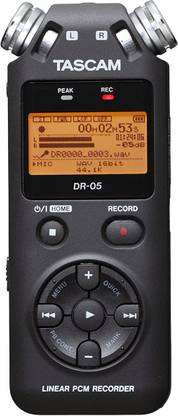
Tascam DR-05 Linear PCM Recorder NA Voice Recorder
Tascam dr-05 record sound.

It's looking at the voltage coming from the microphone and taking precise measurements every forty four point one thousandth of a second. It takes the voltage reading and well right sit down it furiously quantifying and logging the voltage and measures with 16 bits of accuracy. And the result is a string of numbers that logically represent the shape of the sound waves that exerted pressure on the microphones.

And it can actually write down to numbers at a time since this has two microphones and Records in Stereo inside. This recorder is what's called an analog to digital converter or ADC and is the actual device responsible for creating the stream of samples. It takes the analog signal coming from the microphones themselves and converts it into a string of discrete numbers. If you open the file that audacity makes or some other audio editing software. You see what looks like a wave form of the sound it is a waveform but a waveform that's been plotted.
Audacity ® | Free, open source, cross-platform audio software for ...

Saturday, April 18, 2020

From copper to PCB [Part 2] - Logical View

So first see the design process,

First step we have to make a logical diagram of the circuit we want to turn into a PCB. This logical diagram is like the circuit diagrams we draw using the symbols in our copy. This diagram is called schematic and is done by the help of Schematic capture softwares present inside a PCB design software package or a EDA CAD package. EDA stands for Electronic Design Automation and CAD stands for Computer Aided Drawing.

Next if this diagram is simple enough to contain only passive circuit elements we can fully test the output of the circuit using a software inbuilt there called SPICE or we can manually check in SPICE by making a circuit and in other softwares. And if our circuit has a lot of transistors and different functioning ICs then we can only check the voltage and ground and other short circuits or in between them or voltages across passive elements. SPICE stands for Simulation Program with Integrated Circuit Emphasis.

Storing sound logically : PCM

Now, If only there was an way to encode the sound perhaps the way to store sound logically rather than analogously maybe if the signal weren't the sound itself, but instead were a set of instructions on how to recreate it. We could get lossless near-perfect sound reproduction and thus digital sound was born the heart of uncompressed digital sound is pulse code modulation or PCM.
                                        
PCM's roots can be traced back to the telegraph days, but it's invention as we know it today for sound came from British engineer Alec Reeves . He first devised the digital method of transmitting and receiving project “The Green Hornet” one was much more complicated than simple pulse code modulation, but PCM was a large part of its encryption.

So how does PCM work? It's actually simpler than it might seem at first. It's rather like a system for repeatedly asking what the instantaneous amplitude of a signal is many thousands of times per second. Then simply writing that down.

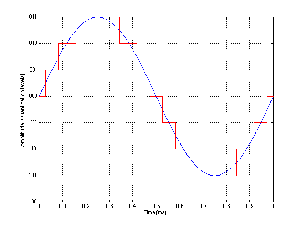
Let us imagine a simple sine wave, If This were to be encoded On a vinyl record the groove of the record would start out straight in the center then move to the left as the signal intensity reached Peak, then it would start to move to the right keep moving keep moving and then it would pull back to the center when it's played back the movement of the stylus as the walls of the groove wiggle it back and forth will recreate this signal and audiotape does the same thing except the intensity isn't recorded as a physical movement, but as a degree of magnetization on the tape, but with PCM, we aren't even trying to recreate the wave instead we are trying to quantify it and play Connect the Dots.
8 Digital Audio
Let's just say I want to take 20 samples of that waveform.  I'll divide it up into 20 chunks now. I just need to define the detail. I can have within each sample. Let's put this on a scale of 0 to 15. That's four bits of resolution. Now at each sampling point we can take the closest Value, this sine wave can now be represented as the string of numbers.

Friday, April 17, 2020

From Copper to Printed Circuit Board [part 1]

We all have seen some form of printed circuit board or PCB in one way or another, we have seen our computer motherboard pictures or in hand. That is a PCB. We might have seen other TV daughter boards or mother boards those are PCB ! Even some of us game enthusiasts might have used graphics cards those are PCB too ! Or you might want to design yourself one for your project.


So well, how to design one and can we get them manufactured ?

Lets see from the perspective of a PCB designer to understand them in a better way. As there is no professional course I was enrolled in and I had to complete my project with a PCB design, so everything that I self-taught I am briefly explaining here any wrong things or comments are invited and the main target audience is those who want to do design but are not finding a way out, also later on I will compare this PCB design process with IC design process !


Thursday, April 16, 2020

Analog recording technology [part 2]

After 1st part : 

And that something is an analog of the original sound waves, improvements in sound technology were for many years wax cylinders became shellac discs & shellac became vinyl magnetic recording wire allowed for a reusable electronic recording medium.


This was improved into Magnetic Tape allowing for a high-fidelity versatile recording medium enabling multitrack recording and editing and to improve on the noise of magnetic tape different particle formulations were developed and noise reduction technology was finally mature.
                                                        Magnetic Tape Recording High Resolution Stock Photography and Images - Alamy


But we were still just taking some signal from a microphone then slapping it basically as is on to some sort of physical medium and that Medium was never perfect, poorly made tape would cause signal dropouts, discs would be plagued by dust and scratches and would slowly we're down with each play because the analog medium contained the sound in its physical properties. 
It was inherently prone to wear damage and Distortion which of course would wear down damage or distort the sound recording itself !

Tuesday, April 14, 2020

Analog recording technology [part 1]

Radio accomplishes all these we discussed earlier all wirelessly, but the sound isn't recorded to capture the sound coming from the microphone to be played back later. It has to be converted into an analog of the signal and that's why it's called analog recording technology. 

Doesn't matter if it's a record, a cassette tape and open reel tape or even a wax cylinder. The sound information is recorded directly. The sound information is recorded directly onto something which can then be used to recreate a copy of the original sound information. 
LP record - WikipediaSilly facts about audio cassette tape productionAnalog stereo open reel tape deck recorder vintage closeup.


Sunday, April 12, 2020

groove

The loudspeaker became a big deal next. 
Loudspeakers are the opposite of microphones, instead of producing a voltage as a reaction to a sound pressure wave moving its diaphragm, a loudspeaker will move its diaphragm and create a pressure wave as a reaction to incoming voltage with loudspeakers.

All the record players can now use a phonograph cartridge which acts like a microphone for records, the movement of the stylus as the groove vibrates. It generates a voltage which can be Amplified. To drive a loudspeaker. 
which causes pressure changes in the air around the loudspeaker which your ears concentrate down to your eardrums, and now your real eardrums are vibrating in roughly the same way that the original artificial Eardrum moved in the microphone in the first place. 

Yeah, in essence the record becomes a way to recreate the original pattern of voltage created by the microphone so that the sound can be heard again in a different place at a different time.

Friday, April 10, 2020

Discs and Cylinders

Commercially produced discs and cylinders were molded from Master recordings and wouldn't wear down like the original wax cylinders. They were played back using devices like The Phonograph. This device is called a reproducer and for decades all phonographs were based on simple acoustic devices like this for nearly a century. This is how artificial sound worked back then.
                            Cylinder Recordings
The technology worked something like this horn would collect sound waves and recreate them onto a physical analogue then that physical analogue could recreate the original sound waves when played back. 
                                                        Columbia Disc Graphophone | 1stdibs.com | Vintage record player, Phonograph,  Water for elephants
Well, it all started with simple acoustic devices like this phonograph eventually improvements were made the development of the electronic microphone was perhaps the most important now sound waves cause a receiving diaphragm to move a coil of wire around a magnet and a voltage is produced in the wire as the diaphragm moves, this time sound waves are recreated as a voltage coming from the microphone and by amplifying this voltage and sending it into a new record cutting device which moves its cutting stylus as a function of the voltage it receives.
                                               Analog Recording

Thursday, April 9, 2020

The Phonograph

Have you ever noticed that a loudspeaker is the opposite of an eardrum? 
Probably not but it's true, see our ears work by concentrating changes in air pressure onto a small diaphragm that will move back and forth with the pressure changes this vibration causes stimulation in the hearing bits of the ear, which your brain can assuming you have normal hearing ability turn into what we perceive as sound a loudspeaker does the opposite it's diaphragms.
The driver cones vibrate to create pressure. The air this vibration gets transferred to our eardrums so we can hear it. We're sticking to simple stuff today because the rabbit hole is just too deep. 

All you need to know is that things vibrate which causes air pressure to fluctuate which causes our eardrums to also vibrate which stimulates the brain so that we can perceive that vibration as sound.

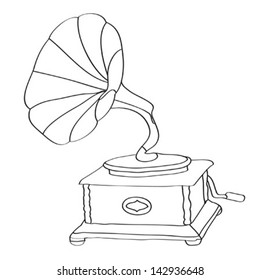
Let's go over a brief history of sound recording Technologies the first device which could reproduce the sound recording was The Phonograph Thomas Edison's invention consisted of an artificial eardrum, which would vibrate along with changes in sound pressure. And with the aid of a collecting horn the vibration is transferred into this stylus creating an up and down motion. This carves a Groove into a wax cylinder and the vibrating style is creates an imprint of the sound wave the depth of that. Becomes a literal analog of the original Sound Vibrations. 

                                                      Small Portable Phonograph Images, Stock Photos & Vectors | Shutterstock
Then when the stylus is run over, the now bumpy Groove the bumps cause the diaphragm to vibrate in the same way as it did when it first made the bumps and the result is that you hear the same sound as before or at least a barely passable imitation of that sound.

Wednesday, April 8, 2020

Instruction and Description

Please read all the posts in ascending order of dates, or follow the Blog Archive so as to make sence of the big thing we are trying to explain.

This is a text-based blog which tries to explain the engineering behind some popular electronics & communication devices in simple words. This is a text-based blog so more emphasis is on text and information than pictures. The information in this blog is derived from many sources on the internet and the pictures are also taken from popular websites.

[EDIT 20th April 2020]

The photography posts are original and taken by our smartphone's camera and cannot be found anywhere else on the internet. All the Photograph Posts are original and belongs to this blog, Do not use them without credits


This blog was created during the COVID-19 pandemic in April 2020. During our 6th semester of B.Tech.

Blog contributors -

  • Amrita Adhikari (10800317123)
  • Subhankar Karmakar (10800317029)

We both are B.Tech. students in Electronics & Communication Engineering in Asansol Engineering College(under Maulana Abul Kalam University Of Technology), West Bengal, India.
                                        

About our Original Photographs

All the Photograph Posts are original and belongs to this blog, Do not use them without credits or mentioning that they are from this blog or who shot the original picture.